

 par
par Review of Ce que j'ai vu à Auschwitz
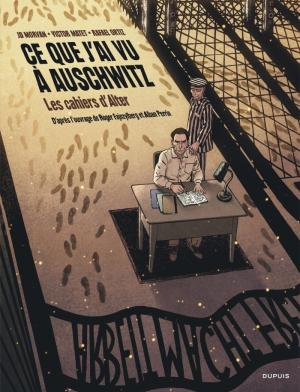
Ce que j'ai vu à Auschwitz is a powerful and emotional graphic novel that leaves a deep impact on the reader. The story is told through two voices: a father who survived Auschwitz and his son who slowly discovers the painful truth hidden inside his father’s notebooks. Even for readers who already know about the Holocaust, this book remains shocking and unforgettable.
One of the strongest parts of the novel is the testimony of Alter, the father. His life was marked by suffering, violence, war, and survival. From being a communist activist in Poland to fighting during the Spanish Civil War and later surviving Auschwitz, his story is both tragic and inspiring. The fact that he was one of the few Jewish survivors who belonged to the Sonderkommandos makes his testimony even more important and heartbreaking. Through his notebooks, readers can understand a small part of the horror and inhumanity that prisoners experienced inside the camps.
The graphic novel also explores the emotional relationship between the father and the son. Roger, the son, grows up feeling the weight of secrets and silence inside his family. The discovery of the notebooks becomes not only a historical revelation, but also a personal and emotional journey. This gives the story an intimate and human dimension that makes it even more touching.
The artwork is another major strength of the book. The illustrations use shadows, dark colors, and light very effectively to create a heavy and dramatic atmosphere. The drawings perfectly reflect fear, sadness, pain, but also moments of hope and humanity. The visual style helps readers feel emotionally connected to the story in a stronger way than words alone could do.
What makes this graphic novel especially important is its message about memory and remembrance. The book reminds readers that history must never be forgotten, especially at a time when violence, hatred, and historical denial still exist in the world. It shows how dangerous hatred can become and why preserving the memories of survivors is necessary for future generations.
In conclusion, Ce que j'ai vu à Auschwitz is not only a graphic novel, but also an essential testimony about one of the darkest moments in human history. It is painful, emotional, and deeply human. Through its moving story and beautiful artwork, the book succeeds in honoring memory while warning readers about the consequences of hatred and intolerance. It is a difficult but necessary read that stays in the mind long after the final page.
En bref
Ce que j'ai vu à Auschwitz is a powerful and emotional graphic novel that leaves a deep impact on the reader.
Positif
Powerful and emotional story
Important historical testimony
Beautiful and expressive illustrations
Strong father-son relationship
Deep message about memory and humanity
Makes readers reflect on history and violence
Immersive atmosphere throughout the book
Negatif
Very heavy and emotional subject matter
Some scenes are difficult to read
Can feel emotionally overwhelming at times
Slow pacing in certain parts
Not suitable for readers looking for light entertainment
Autres critiques de Ce que j'ai vu à Auschwitz





Laissez un commentaire
Commentaires (0)